Mentor Business Podcast · Episode 99 with Andy Bounds and Peter Boolkah
Sales vs Marketing: How to Get Your Sales and Marketing Working Together
Topic · Growth and scaling · 5 min read · Ep. 99 · Published 13.08.2026 · Updated 22.10.2026

Key moments
- 0:00 Marketing vs sales — blaming the wrong person
- 3:10 Is it really versus? Communication and ownership
- 7:45 What sales actually want from marketing
- 11:20 Peter Boolkah on visibility and real opportunities
- 16:05 Why buyers arrive pre-sold
- 20:40 Afters and certainty
- 25:15 Market limits and lazy "we need more leads" thinking
- 29:30 Passion, resilience and mood-hoover leadership
- 33:10 Behaviours of high-performing sales teams
- 38:00 How to bring marketing and sales together
Sales and marketing work when they’re one team with one outcome: the right number of the right leads, turned into sales quickly. When they don’t, it’s almost always because nobody has told the other side exactly what they want. That was the verdict when I put sales trainer Andy Bounds and business and executive coach Peter Boolkah around the table on episode 99 of the Mentor Business Podcast and asked them to fight it out.
I set it up as sales versus marketing because that’s how it sounds in so many businesses. “Marketing’s leads are rubbish.” “Sales can’t close what we give them.” Andy pushed back straight away: the word “versus” is the problem. In his experience it’s rare that one side is 100% right and the other 0%.
What is the difference between sales and marketing?
Marketing’s job is to get the business seen by the right people and turn that attention into good leads. Sales’ job is to turn those leads into customers, ideally quickly. Andy put the second part simply: any salesperson wants sales, speed, and to enjoy it while they’re at it. Marketing plays a big part in all three, because the right quality and quantity of leads lifts sales, and good qualifying upfront speeds the whole thing up.
Both agreed the line between the two is blurring. Andy’s point was that customers can now do nearly all their research before they ever speak to a salesperson. If you started a business today, you might not set up separate sales and marketing functions at all.
Why is sales and marketing alignment so hard?
Because the communication is missing. Andy told the story of a company that had “a bit of a go” at its marketing team. He asked when they’d last sat down with marketing and told them exactly what outcomes they wanted. Silence. “Maybe instead of making them guess, you could have a word about it.”
He also warned about the wrong measures. Some marketers ask whether people liked the campaign or thought the content was good. The question that matters is whether it generated good leads for sales. And if marketing and sales put out different messages, the customer gets one story from your content and another from your salesperson.
Peter made the same point from the marketing side, especially with outsourced agencies. The agency isn’t the enemy; it’s part of the team. Go into the meeting honest about what you’re seeing and what you want, with the data, and ask how you help each other win, rather than looking for someone to blame.
How is AI changing sales and marketing?
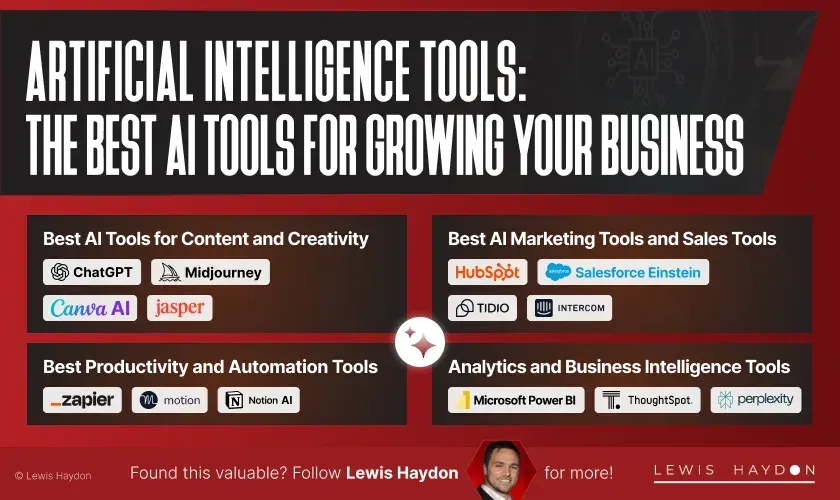
Peter’s view is that a lot of the sales conversation now happens inside tools like ChatGPT and Perplexity, before a prospect ever contacts you. By the time people come to him, an AI tool has often already put him forward as someone who can solve their problem. The conversation that follows is less about selling and more about understanding what they want and whether there’s a chemistry match.
So a big part of the sales process has already been done by what you’ve published. That’s why visibility matters so much: on his telling, if you’re on the second page of Google, you may as well not exist. And once people do reach your website, they’re often still researching, so you need something valuable enough for them to leave their details, or you can’t continue the conversation.
What do customers want?
Andy’s answer: afters and certainty. Nobody wants what you do; they want how they’re better off after it. You don’t want a lawyer; you want not to go to jail. And you want certainty that this particular lawyer will keep you out of it. That certainty comes partly from trust, and partly from track record, results elsewhere, awards and someone you trust recommending them. If either afters or certainty is missing, you either don’t make the sale or you make an unhappy one, and the customer starts arguing about price.
He applies the same thinking to briefing your own marketing. Don’t brief your agency on deliverables (“creative, red or blue”). Tell them the end game: “I need twice the number of leads, particularly in these three sectors. This is how I measure success. This is what it’s worth to me.”
How do you increase sales when quotes aren’t converting?
This was the part I found most useful for owners right now. Peter said that across most of the businesses he coaches, quote values are the biggest they’ve ever been, but the orders aren’t being placed. They’re not losing the work; customers simply aren’t in a position to commit yet. In construction, for example, he’s seeing schemes held up by delays.
His warning: chasing more of the same leads in a market that isn’t buying is how you run out of money. Every market has a limit on how much it’s trading at any time. Understand your buying cycle, and if your traditional market is stuck, look at which other markets are moving faster, and whether you need to bring something new to market.
Andy backed it with a rule he credits to the consultant Alan Weiss: to succeed you need a market need, the skills, and the passion. If any one is missing, it won’t work. You can have all the skill and passion in the world, but if nobody needs it or can afford it, it doesn’t sell.
How do you align sales and marketing?
Their closing advice, in their words as near as I can put it:
- Speak more often. Be clear exactly what sales wants from marketing and what marketing will give sales. Get the handover right. (Andy)
- Align your key messages, so marketing and sales sound like the same company, and lead with afters and certainty, not when you were founded. (Andy)
- Use each other’s strengths. Marketing knows messaging; sales knows influencing, persuasion and objection handling. Learn from each other. (Andy)
- Hire for the right behaviours. Andy looks for optimism, proactivity, solution-finding and an obsession with the customer’s afters. Salespeople who only care about hitting their number, he qualifies out.
- Master your channel. Whatever channel you use, make sure you’re actually seen: emails that get opened, posts people see. Otherwise you can be “everywhere and nowhere”, and no message is good enough to fix that. (Peter)
What sales and marketing strategy should an owner set?
In one of my own businesses, the sales director’s first line to marketing is always “we just want an ROI”. Fair. But it can’t only be marketing’s job. The owner has to make the two sides sit down, agree the outcome and the handover, and measure both against the same number. When they do, the blame stops, because they’re both looking at the same scoreboard.
If your sales and marketing are pointing at each other, that’s a structure and accountability problem, which is exactly what I work on with owners. Book a virtual coffee and we’ll find where the handover breaks. My prices are published.
More from Peter on the show: how to get more clients without paid ads.