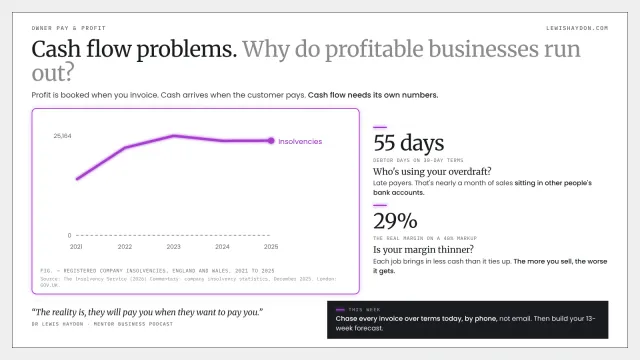
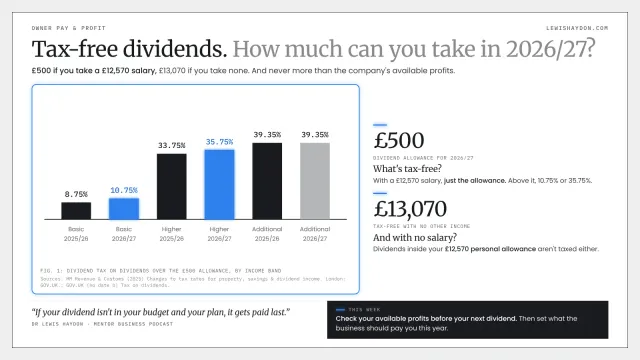
Article
What Happens to Staff When a Company Goes Into Administration?
Topic · Owner payoff and profit · 9 min read · Published 09.11.2026
Watch: Dr Lewis Haydon on BBC Midlands Today
BBC Midlands Today, 9 November 2026. Broadcast © BBC.
When a company goes into administration, the staff are still employed by it until the administrator decides otherwise. The administrator can keep people on while the business is sold, transfer them to a buyer, or make them redundant. If you’re made redundant and the company can’t pay, the government’s Redundancy Payments Service pays what you’re owed, up to set limits: redundancy pay, up to 8 weeks of unpaid wages, up to 6 weeks of holiday pay and your statutory notice pay, each capped at £751 a week (GOV.UK, 2026).
That’s the question the 12,000 people at Poundland are asking this week, and it’s what I was asked live in the BBC Midlands Today studio on Monday 9 November 2026, with James Bovill. I’m a business owner here in the West Midlands, not an insolvency practitioner, so here’s what I said on air, and the facts behind it from the people who set the rules.
BBC News reported the interview the next morning: Poundland crisis “could see all businesses suffer” (BBC News, 10 November 2026), quoting my point that the high street is “all about income: income for the people and income for the businesses on the high street. If that income, the cash flow, isn’t there, all businesses suffer.”
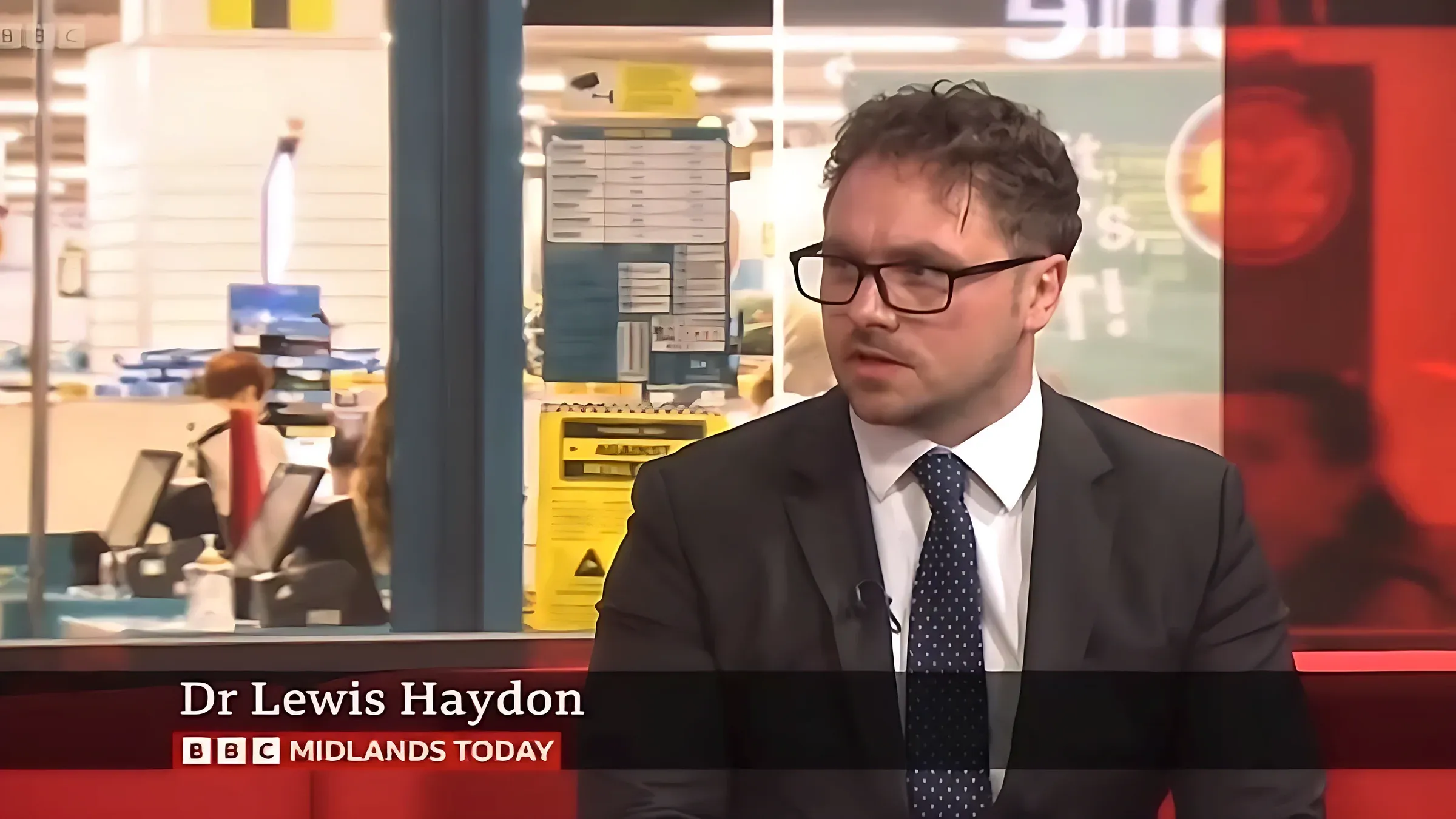 Live in the BBC Midlands Today studio, 9 November 2026. Image: BBC Midlands Today.
What I said on BBC Midlands Today
Poundland started on a market stall in Bilston, in the Black Country. Gordon Brothers bought it for £1 last year, and by this week it was described as running on fumes, with its owners trying to sell and MPs asking questions. These are my answers on air, lightly edited for reading.
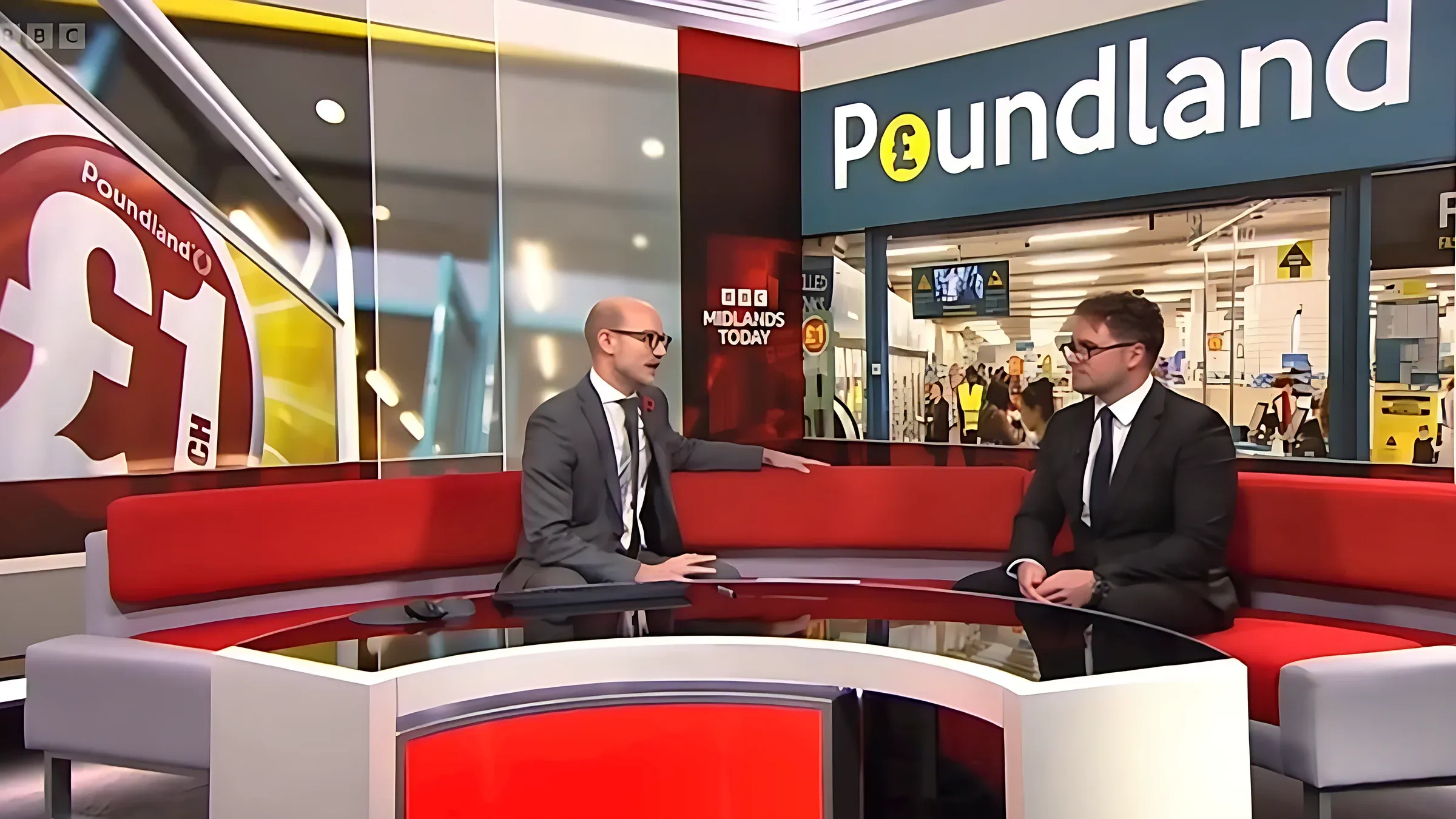 With James Bovill in the BBC Midlands Today studio. Image: BBC Midlands Today.
Why is Poundland in trouble if it’s been having a good year?
“It’s a real shame, because we’ve heard lately that they’re having a good year, they’re making a profit, so what is going on? Well, it’s probably to do with the structure of the business and to do with the debt that’s in the business. And unfortunately it’s the people that have to pay for it: the employees, and the suppliers as well.”
How much of a blow would it be to the area if Poundland goes under?
“As an entrepreneur around that area, it’s a real shame, because we’ve grown up understanding these success stories about Poundland: how it started off on a market stall and grew into a national success. What we hear now gives us a lot of uncertainty that this may happen to us as a business as well. All the employees that we employ, they’re all thinking: could this happen to our company? And it’s not good news this close to Christmas.”
What’s going wrong for the high street, and what can be done?
“We need people to be going to the high streets. It’s not just Wilko, it’s not just Poundland. It’s the small cafés next door that have the traffic, it’s the public transport that people spend on. This is all about income: income for the people, income for the businesses on the high street. If that income and that cash flow isn’t there, all businesses suffer.”
What advice would you give Poundland workers who are worried this week?
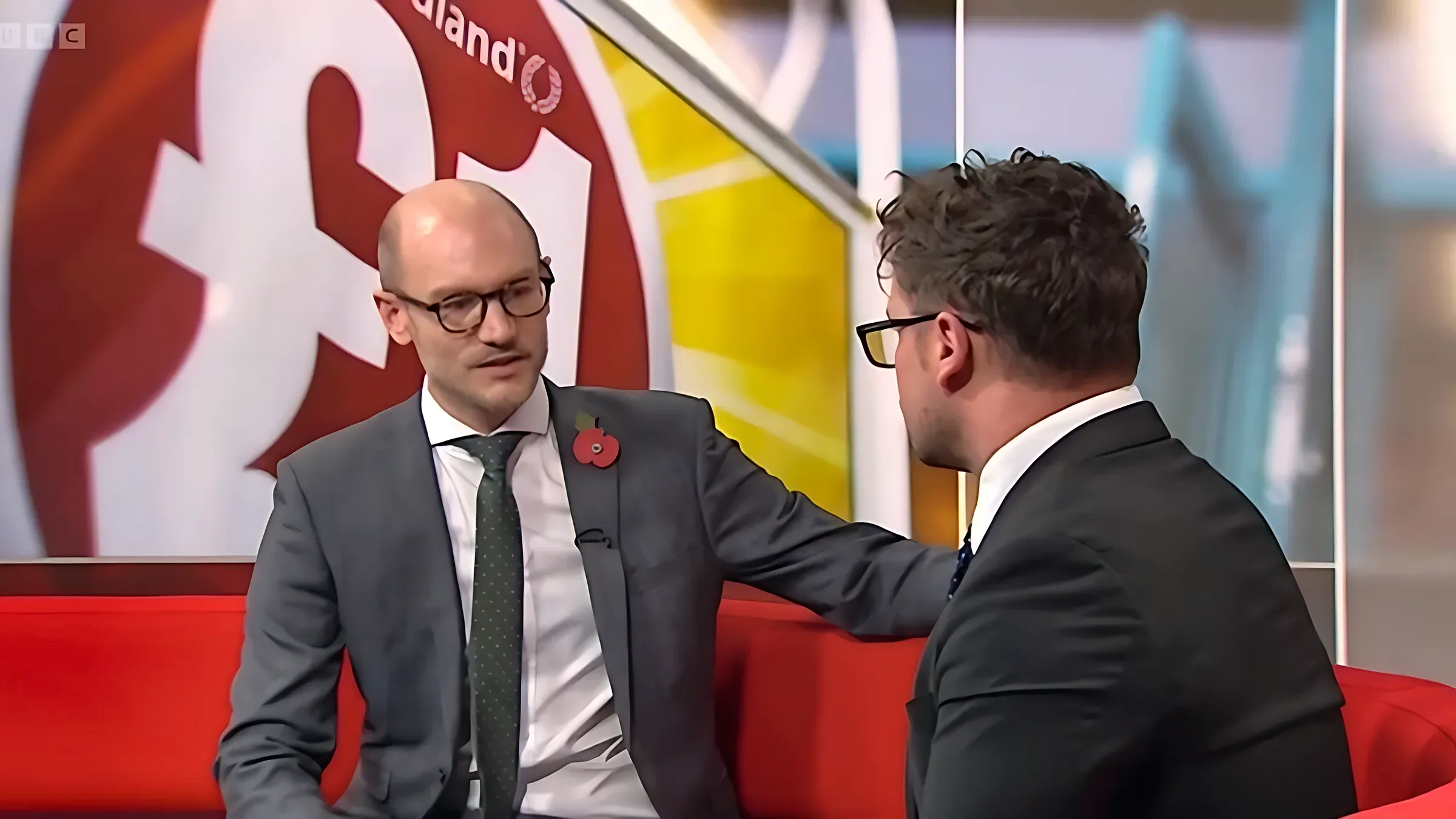 James Bovill asks what Poundland’s staff should do this week. Image: BBC Midlands Today.
“The best advice I’ve got for the workers is: you’ve got to stay strong. There are a lot of things that are out of your control. But what can you control? Make sure you’re getting good references and good backing behind you, and make sure you’re always ready for any weather that may come towards you.”
What happens to staff when a company goes into administration?
Administration is a rescue process. An insolvency practitioner, the administrator, takes control of the company from the directors, and the creditors are held off while the administrator tries to save it, sell it or close it in an orderly way.
For staff, that means three possible outcomes:
- You’re kept on while the administrator keeps the business trading and looks for a buyer. You should be paid as normal for the work you do from now on.
- The business, or part of it, is sold and you move to the buyer. When a business is transferred, staff usually move across on their existing terms under the TUPE rules (Acas, 2026).
- You’re made redundant, because the administrator closes stores or sites that no buyer wants.
Nobody knows yet which of those applies to which Poundland store. If a buyer takes the stores on, most jobs usually move across. If not, statutory redundancy pay is often far less than people earn. The uncertainty is the hardest part for staff: the waiting.
What can staff claim if they’re made redundant?
If the company can’t pay what it owes you, you can claim from the government’s Redundancy Payments Service (GOV.UK, 2026):
| What you can claim | The rule |
|---|---|
| Redundancy pay | If you’ve worked there 2 years or more: half a week’s pay per year under 22, one week’s pay per year aged 22 to 40, one and a half weeks’ pay per year aged 41 or older, up to 20 years |
| Unpaid wages | Up to 8 weeks, including bonus, overtime and commission in your contract |
| Holiday pay | Up to 6 weeks, for holiday earned or taken but not paid in the 12 months before the insolvency |
| Notice pay | One week per year worked, up to 12 weeks |
| The cap | £751 a week (£719 if you were made redundant before 6 April 2026) |
Anything owed above those limits becomes a claim against the company, and it waits in the queue with everyone else. Missing pension contributions go to the administrator. If your situation is complicated, speak to Acas or an employment adviser; I’m not a lawyer.
What should you do this week if your employer is in administration?
What I said on air, in practical steps. Control the things you can:
- Keep working, and keep your records. Payslips, your contract, your holiday balance, any overtime or commission you’re owed. If you need to claim, that’s your evidence.
- Get your references now. Ask your manager for a written reference while they’re still there to give it. Good references are the backing I talked about.
- Update your CV this week, not after the news. If your store is kept, you’ve lost nothing. If it isn’t, you’re days ahead of everyone else applying for the same jobs before Christmas.
- Look after your money. If you can, keep a little back for the gap between the last wage and any claim being paid.
- Stay strong, and talk to someone. Worry is normal. Your family and your colleagues are feeling it too.
What I’d have said with more time
Live TV gives you three or four questions. I went in ready to talk about the owners and the small suppliers, and the questions, rightly for a teatime audience, were about the staff. Here’s what I’d prepared and didn’t get to say.
I’ve been that supplier
“We’ve had customers go into administration owing us tens of thousands for work we’d already delivered. Others in my industry have lost hundreds of thousands. That’s enough to put most small businesses under, and it’s the bit people don’t see.”
How we survived it: we’d learned not to let one customer become too big a share of the business. That’s the advice I’d give any owner watching.
Who gets paid first?
When a company goes into administration, the banks and the administrators are paid first. Then some of the staff’s wages and money owed to HMRC. The small supplier comes last, often with pennies in the pound. On the sofa I’d have put it simply: the banks first, the small supplier last.
What should suppliers do right now?
Only send more stock if you could cope with not being paid for it. Check your contract for retention of title, which can let you get your goods back if they haven’t been paid for. And talk to your bank, or HMRC, early, not when it’s urgent. The full owner’s version is here: what happens when a company goes into administration, and what Poundland means for small business owners.
If you’re hiring, give Poundland’s staff a look
It’s bad for the local job market in the short term, and how bad depends on this week. But if you’re a local business that’s hiring, Poundland’s staff know customers and they work hard. Give them a look.
What my research says about uncertainty
My doctorate looked at how people in business cope and persist under pressure. Uncertainty does damage before anyone loses a job. What helps is honesty and a plan. If you’re an owner, talk to your team early.
Should people stop shopping there?
No. The stores are open, and the staff need the trade. If you’ve got a gift card, spend it sooner rather than later.
What I’d want to see is a buyer who keeps the stores open and the suppliers paid. A well-run business is the best job security there is.
What is a lack of honesty with your team costing your business?
Every owner in the West Midlands watched the same news as their staff this week. If your team doesn’t know how the business is doing, they fill the gap with the worst story they can find, and the best people start updating their CVs first. That’s the cost: not the administration somewhere else, but the good people you lose to the worry it creates in your own business, and the work that slows while they wonder.
The owner who tells the team the truth runs a different business. People know where it stands, they know what they’re working towards, and when a big name goes under, they’re the ones others want to come and work for.
First steps with me
- This week, tell your team how the business is doing, in plain words, before they have to guess.
- Check what any one customer owes you with the free 13-week cash flow forecast, and take the scorecard to see where else the business is exposed.
- If the news has you worried about your own business, bring it to a virtual coffee, 30 minutes on Zoom, no charge, or WhatsApp me. 1:1 mentoring is from £800 a month plus VAT, every price published.
FAQs
Do staff get paid when a company goes into administration?
Yes, for the work they do while the administrator keeps the business trading. Wages already owed from before can be claimed from the Redundancy Payments Service if you’re made redundant, up to 8 weeks, capped at £751 a week (GOV.UK, 2026).
Do you lose your job if your company goes into administration?
Not automatically. The administrator may keep you on, sell the business with you in it, or make roles redundant. Many staff keep their jobs when a buyer takes the business on.
What happens to my holiday pay if my employer goes into administration?
If you’re made redundant, you can claim up to 6 weeks of holiday you earned or took but weren’t paid for, from the 12 months before the insolvency, up to the weekly cap.
Will Poundland close all its stores?
Nobody knows yet. Its owners are trying to sell the business, and an administrator would decide which stores keep trading. Watch for news of a buyer this week.
Who is Dr Lewis Haydon?
A business owner and mentor based in Birmingham, UK. I own and invest in businesses, including a manufacturer in the West Midlands, and I mentor owners of established businesses. I’ve spoken about small businesses on BBC Midlands Today and BBC Radio WM. More on the press page.
References
- Acas (2026). TUPE: when a business transfers. https://www.acas.org.uk/tupe
- GOV.UK (2026). Your rights if your employer is insolvent: what you can get. https://www.gov.uk/your-rights-if-your-employer-is-insolvent/what-you-can-get
- Julian, S. and Flash, O. (2026). Poundland crisis ‘could see all businesses suffer’. BBC News, 10 November 2026. https://www.bbc.co.uk/news/articles/cvze4edxj1k7o
- BBC Midlands Today (2026). Live studio interview with Dr Lewis Haydon on Poundland, presented by James Bovill. BBC One West Midlands, 9 November 2026.