Article
Cold Calling Tips: How Business Owners Win B2B Work on the Phone
Topic · Growth and scaling · 4 min read · Published 12.12.2024 · Updated 23.10.2026
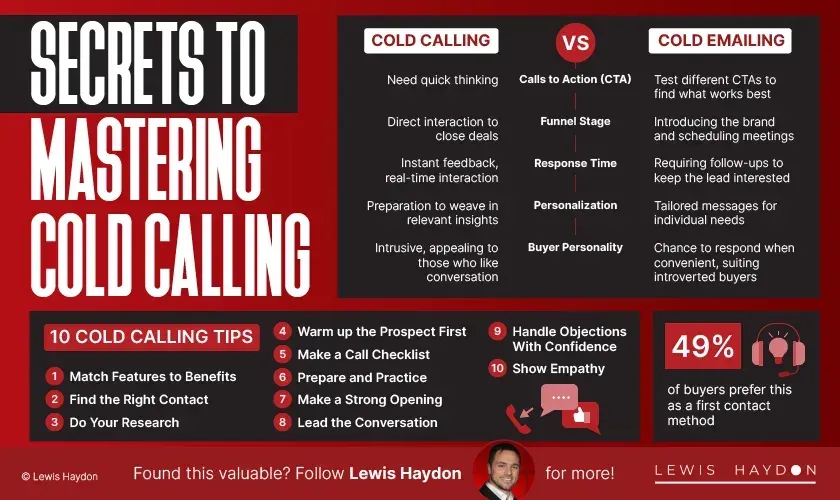
Cold calling isn’t dead. The old way of cold calling is dead. Ringing a bought list, reading a script and pushing for a meeting gets you hung up on, and it should. What works now is calling a short list of the right businesses, opening with a problem they recognise, asking more than you pitch, and ending every call with a clear next step, even if that step is “no thanks”.
I’ve done it myself. In Australia I cold called for a company, and I broke into coaching by knocking on every door on the industrial estates. Most people said no, plenty told me where to go, and the ones who said yes built the business. So this isn’t theory.
Why most owners hate cold calling
Because they think it means being pushy. It doesn’t.
Usually, when a cold call feels awful, you’re not being pushy. You’re pushing the wrong door. You haven’t worked out who you should be calling, so you’re ringing people who were never going to need you, and both of you know it within ten seconds.
Fix who you call and most of the discomfort goes.
Cold calling tips that work for B2B owners
1. Know exactly who you’re calling
Before you pick up the phone, write down your ideal customer: the sector, the size, the job title of the person who decides, and the problem you solve for them.
A simple way to find it comes from James Willis, who has run phone and LinkedIn outreach for years and joined me on the Mentor Business Podcast: look at your last ten customers and rank them on how profitable they were, how long they stayed, how big a problem you solved, and where they are now. The top three tell you who to call next. Add one more question: which ones did you enjoy working with?
2. Build a short list, not a long one
Fifty businesses you’ve researched beat five hundred you haven’t. Check their website and recent news before you call. If you can’t say in one sentence why you’re calling them, don’t call yet.
3. Open with their problem, not your company
Nobody cares who you are in the first ten seconds. They care whether this call is worth their time. Lead with something they’ll recognise: “I work with manufacturers who’ve grown turnover but find the margin hasn’t followed. Is that something you’re seeing?”
Then stop talking.
4. Ask more than you pitch
The aim of a first call isn’t to sell. It’s to find out whether there’s a problem worth a proper conversation. Ask what’s going on, what they’ve tried, and what happens if nothing changes. If there’s nothing there, say thank you and move on. You’ve saved both of you time.
5. Agree one next step
Every call ends with something specific: a meeting in the diary, a call back on a named day, or a clear no. “I’ll send you some information” is not a next step. It’s a polite way to end the call and never hear from them again.
6. Get introduced when you can
The best cold call is the one you don’t have to make. As Andy Bounds put it when he came on the show, if you want to meet someone you don’t know, you can cold call them, or you can ask someone who knows you both to introduce you. The second works far more often. Before you call a business, check whether anyone you know already knows them.
7. Treat it as a numbers game, and learn from the numbers
People say cold calling isn’t a numbers game. It is, and it isn’t. You need the skill, and you also need the volume. Track how many calls you make, how many real conversations you have, and how many turn into meetings. If calls don’t become conversations, it’s your list or your opening. If conversations don’t become meetings, it’s your questions.
8. Do it at the same time every week
Put calling in the diary like any other meeting and protect it. Show me your diary each week and I’ll show you where your sales will be in six months. An hour every Tuesday morning beats a guilty afternoon once a quarter.
Should the owner make the calls?
At the start, yes. You’ll learn more about your customers from twenty calls than from any report, and you’ll find out quickly whether your offer lands.
But it shouldn’t stay with you. Once you know what works, write it down: who to call, how to open, the questions to ask, how to handle the common objections, and what a good next step looks like. Then train someone else to do it and review the numbers with them each week. A business where every new customer depends on the owner picking up the phone is a job, not a business.
What to read next
- How to improve sales skills, yours and your team’s.
- Sales funnel stages, to see where your calls fit in the bigger picture.
- What a buyer persona is, to sharpen who you call.
- Sales KPIs, for the numbers to track each week.
If new business still depends on you making the calls, that’s the kind of thing I work on with owners. You can see how I work and what it costs.